
Laundry Area Design for Your Home
 0
0
 0
0
A well-designed laundry area can make a surprising difference in how smoothly a home runs. Many people treat laundry spaces as an afterthought, focusing on kitchens, living rooms, and bedrooms first. But laundry is one of the most frequent household tasks, and a cluttered, poorly planned area can make it feel harder than it needs to be. Whether the laundry area is a full room, a hallway corner, a bathroom setup, or a small closet space, good design helps improve organization, efficiency, and even mood. The right layout, storage solutions, lighting, and durable materials can turn laundry from a stressful chore into a more manageable routine. A laundry area can also be stylish. With modern design ideas, it can look clean, polished, and even enjoyable to use. This guide explores laundry area design ideas for different home sizes, covering layouts, storage, décor, and practical upgrades that make laundry spaces functional without sacrificing style.
Start With Layout: Designing for Workflow and Convenience
The layout is the foundation of every good laundry area. A laundry space should support a simple workflow: sorting, washing, drying, folding, and storing. When the layout is poorly planned, laundry becomes messy and frustrating. When it’s well planned, even a small space can feel efficient.
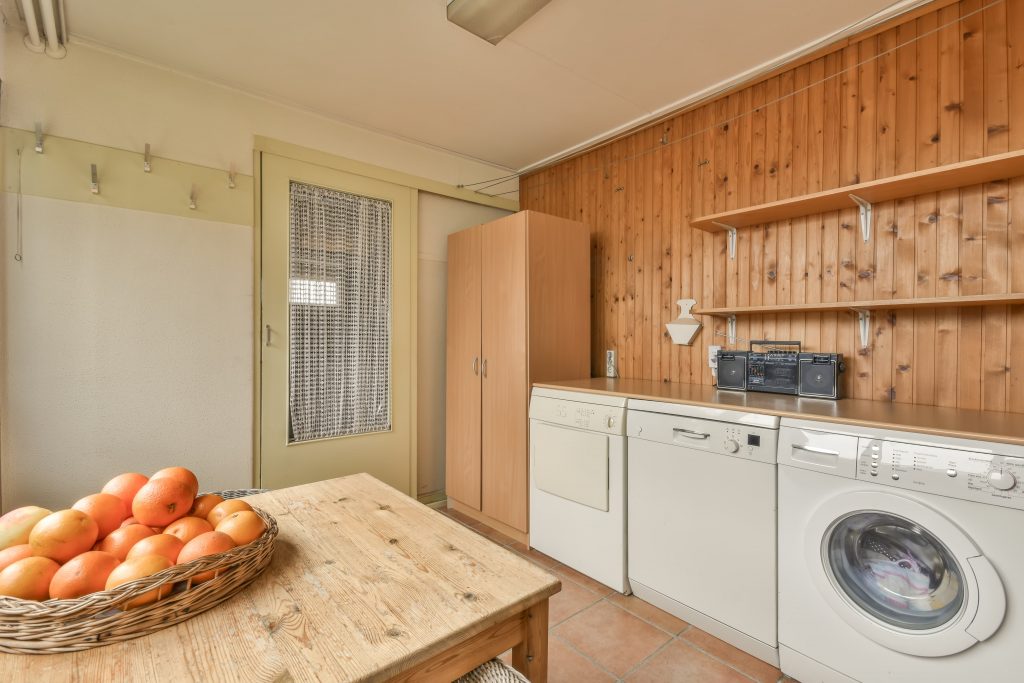
One of the most important layout decisions is whether the washer and dryer will be side-by-side or stacked. Side-by-side setups are easier for folding on top and often feel more “built-in,” but stacked machines save space in smaller homes. If the laundry area is in a closet or narrow hallway, stacking may be the only practical option.
A good laundry layout also includes enough space to open doors, load machines comfortably, and move laundry baskets around. If possible, leaving a small clear area for folding or placing a countertop above the machines makes a huge difference.
In many home and garden laundry room design ideas, layout is treated as the first priority because no amount of décor can fix a space that feels awkward to use. A laundry area should be designed around movement, not just looks.
Storage Solutions That Keep Laundry Spaces From Looking Messy
Laundry areas become cluttered fast. Detergent bottles, fabric softeners, stain removers, dryer sheets, baskets, and random household items often pile up in this space. That’s why storage is one of the most important parts of laundry area design.
Cabinets above the washer and dryer are one of the best upgrades. They hide supplies and make the space look clean instantly. Open shelving is also popular, but it requires more effort to keep tidy. A combination of closed cabinets and open shelves often works best—closed storage for messy items and open storage for neatly styled baskets or décor.
Wall-mounted organizers are another great option. Hooks for hanging clothes, racks for drying delicate items, and slim shelves for small containers can maximize vertical space. Pull-out storage carts also work well in narrow laundry areas, especially between machines and walls.
In many practical home improvement inspiration guides, storage is described as the secret to making a laundry area feel “designed” rather than temporary. A clean laundry space is easier to maintain and makes the whole home feel more organized.
Countertops and Folding Stations: The Upgrade That Changes Everything
One of the most underrated features in a laundry area is a folding station. Without a dedicated surface, laundry ends up being folded on beds, sofas, or kitchen tables, which creates extra work and clutter in other rooms. A folding station keeps the laundry process contained.
For side-by-side washer and dryer setups, adding a countertop above the machines is one of the best design upgrades. It creates a clean, flat surface for folding clothes, sorting laundry, and placing baskets. Many homeowners use durable materials like laminate, butcher block, or quartz depending on budget.
For smaller laundry spaces, a fold-down wall-mounted table can be a smart solution. It provides folding space when needed and folds away when not in use. Some laundry closets also include pull-out shelves that slide out from cabinetry.
In home and garden laundry room design ideas, countertops are often described as the feature that makes a laundry area feel more like a functional room rather than a storage corner. It improves workflow and makes the space look more finished.
Lighting and Color Choices That Make Laundry Feel Cleaner
Lighting is a major part of laundry area design, especially because laundry spaces are often in basements, hallways, or interior rooms with little natural light. Poor lighting makes the area feel dull and cramped. Good lighting makes it feel clean, fresh, and easier to work in.
Bright, neutral lighting helps people see stains, sort colors, and handle laundry tasks more comfortably. LED ceiling lights or recessed lighting are great for full laundry rooms. For laundry closets, under-cabinet lighting can make the space feel more modern and functional.
Color also matters. Light colors like white, soft gray, beige, or pale blue make laundry areas feel larger and cleaner. Dark colors can look stylish, but they require stronger lighting to avoid feeling gloomy. Many modern laundry rooms use a mix: neutral walls with darker cabinets or accent tiles.
In many practical home improvement inspiration sources, laundry rooms are often designed like small kitchens—clean finishes, bright lighting, and intentional color palettes. This approach makes laundry feel less like a chore space and more like a polished part of the home.
Add Smart Features: Sinks, Drying Racks, and Functional Extras
The best laundry areas include features that make daily tasks easier. One of the most useful additions is a laundry sink. A sink is perfect for soaking stained clothing, washing delicate items by hand, and cleaning up small messes. Even a compact sink can add major convenience.
Drying racks are another smart feature. Many clothes need air drying, and having a dedicated drying area prevents people from draping clothes over chairs or doors. Wall-mounted drying racks, ceiling-mounted racks, or retractable clotheslines are all great options.
Other functional extras include ironing stations, built-in hampers, and sorting bins. Some laundry rooms include pull-out baskets for separating whites, darks, and towels. Others include hanging rods for clothes that need to be hung immediately after drying.
In home and garden laundry room design ideas, these extras are often what separate a “basic laundry setup” from a truly efficient laundry space. The goal is to design a space that supports real life, not just looks good in photos.
Make It Look Nice: Décor Ideas That Still Feel Practical
Laundry rooms don’t need to be boring. Even small design touches can make the space feel more enjoyable. One easy décor upgrade is adding a backsplash behind the machines. Tile, peel-and-stick backsplash panels, or even waterproof wallpaper can add personality without sacrificing function.
Decorative baskets are another popular choice. They hide supplies while still looking stylish. Labels on containers can also make the space feel organized and visually clean. Many people use matching glass or plastic containers for detergent and dryer sheets to reduce clutter from mismatched bottles.
Plants, framed prints, or small decorative signs can also add warmth, especially if the laundry room feels sterile. The key is not over-decorating. Laundry areas should stay easy to clean and maintain.
In many practical home improvement inspiration guides, laundry décor is described as the final step. Once layout, storage, and lighting are handled, small design details can turn the space into something that feels modern, welcoming, and surprisingly satisfying to use.
Conclusion
A well-designed laundry area can improve daily routines by making laundry tasks faster, easier, and far less stressful. The best laundry spaces start with a smart layout that supports a natural workflow, followed by storage solutions that prevent clutter from taking over. Adding a countertop or folding station helps keep laundry contained in one space, while good lighting and clean color choices make the area feel brighter and more inviting. Practical features like sinks, drying racks, and sorting systems add real convenience, especially in busy households. Finally, simple décor touches like baskets, labels, or a backsplash can make the space look polished without sacrificing function. Laundry may never become everyone’s favorite chore, but a thoughtfully designed laundry area can make it feel more manageable and even satisfying. With the right combination of function and style, any home—large or small—can have a laundry space that feels organized, modern, and truly useful.