
How to Handle Territorial Cat Behavior: Practical Ways to Stop Aggression and Marking at Home
 0
0
 0
0
Territorial behavior is one of the most common issues cat owners face, especially in homes with multiple cats or when a new pet is introduced. Cats are naturally territorial animals, and they often feel safest when their environment is predictable and “belongs” to them. When they sense competition, change, or unfamiliar scents, they may react by spraying, hissing, swatting, blocking doorways, or even attacking other pets. Many owners assume territorial cats are being mean or stubborn, but in reality, territorial behavior is usually driven by stress, insecurity, and survival instincts. The good news is that territorial problems can often be improved with the right approach. Instead of punishment, cats respond better to calm changes in the environment, proper introductions, and strategies that reduce conflict. This guide explains why cats become territorial, what triggers the behavior, and how to handle territorial cat issues in a safe and realistic way—so the home becomes calmer for both cats and humans.
Why Cats Become Territorial (And What They’re Really Communicating)
Cats don’t become territorial for no reason. Territorial behavior is usually a sign that a cat feels threatened or uncertain. In the wild, territory means survival. It’s where a cat eats, rests, hides, and stays safe. Even indoor cats carry this instinct, and they often treat the home as their personal territory.
Territorial behavior is more likely when something changes. This can include moving to a new home, rearranging furniture, new smells from visitors, or even outdoor cats appearing near windows. Cats can also become territorial when another cat is introduced, especially if the original cat feels like their space is being invaded.
Some cats are naturally more confident, while others are more sensitive. A confident cat may tolerate changes easily. A nervous cat may react strongly. Territorial behavior is not “bad behavior.” It’s usually stress behavior.
In many pet care cat behavior solutions, the first step is understanding the message: the cat is trying to protect their space. When owners respond with punishment, it often increases fear and makes the territorial behavior worse.
Common Signs of Territorial Issues in Cats
Territorial problems don’t always look like obvious fighting. Sometimes they show up in quieter ways. One common sign is spraying or urine marking. A cat may spray walls, furniture, doors, or even the owner’s belongings. This is often a territorial message, not a litter box problem.
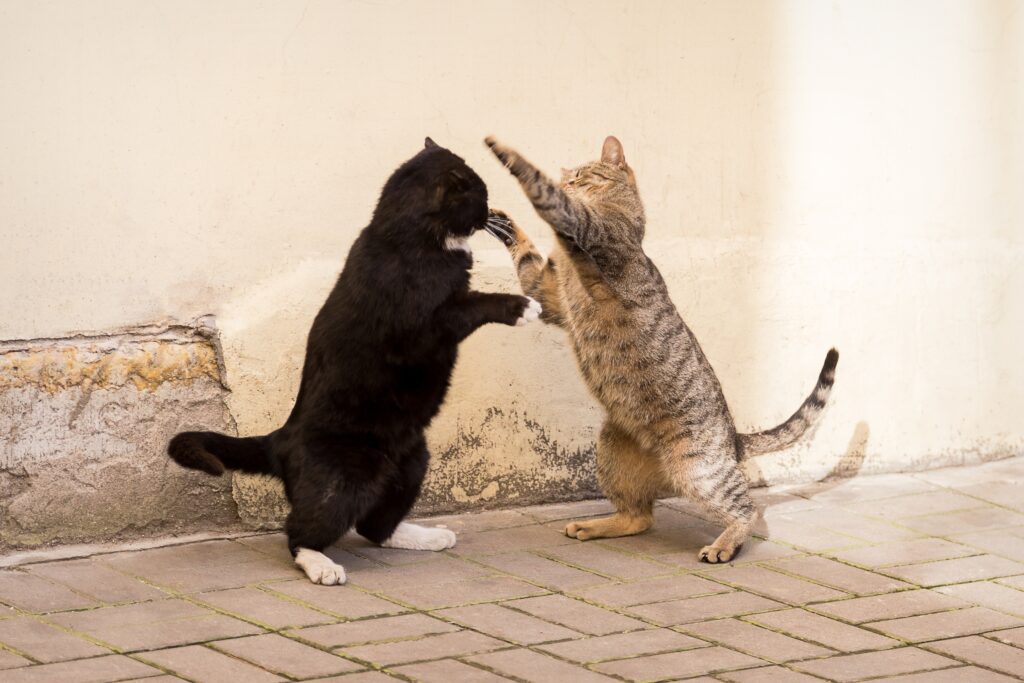
Aggression is another major sign. A territorial cat may hiss, growl, chase, swat, or block another cat from moving around the house. This can create constant stress in multi-cat homes. Some cats also show “staring” behavior—watching another cat intensely and intimidating them without physical fighting.
Territorial cats may also become possessive over resources. They may guard food bowls, litter boxes, sleeping areas, or even the owner. In some cases, territorial behavior shows up as hiding, avoiding certain rooms, or refusing to use the litter box due to fear of another cat.
In many trusted pet care advice sources, these signs are considered important because they show a deeper issue than simple “cat drama.” Territorial stress can affect a cat’s health, appetite, and overall well-being if it continues long-term.
Fix the Environment First: Space, Vertical Territory, and Resources
One of the most effective ways to reduce territorial behavior is improving the home environment. Cats don’t only claim territory on the floor—they claim territory vertically. This is why vertical space is a powerful tool in multi-cat homes.
Adding cat trees, wall shelves, window perches, and high resting areas gives cats more “territory” without needing more square footage. It also helps cats avoid each other. Many fights happen because cats are forced to share narrow pathways or small spaces. Vertical options reduce tension.
Resources also matter. A common rule is to provide one litter box per cat, plus one extra. Food bowls should also be separated so one cat cannot guard them. Water sources should be placed in multiple locations. If one cat is dominating resources, the other cat may feel unsafe and respond with stress behaviors.
In many pet care cat behavior solutions, environmental changes are considered the fastest and most effective first step. Cats feel calmer when they have space, control, and access to resources without competition.
How to Introduce Cats Properly (And Why Rushing Causes Problems)
Territorial issues often start when a new cat is introduced too quickly. Many owners bring a new cat home and expect the cats to “work it out.” Unfortunately, cats rarely solve territory conflicts that way. Instead, they often develop long-term hostility.
The best introduction process is slow and controlled. The new cat should start in a separate room with food, water, litter box, and bedding. The cats should first get used to each other’s scent before meeting face-to-face. This can be done by swapping blankets, using scent cloths, or feeding both cats near the door.
After scent introduction, the next step is visual contact through a baby gate or cracked door. Only after calm behavior should supervised meetings happen. If fighting or intense aggression occurs, the process should slow down again.
In many trusted pet care advice guides, cat introductions are described as a “weeks, not days” process. Rushing creates fear and territorial reactions that can last for months. Slow introductions create safety and reduce the chance of long-term conflict.
Reduce Stress and Build Confidence (Especially for Nervous Cats)
Territorial behavior is often rooted in stress. A stressed cat is more likely to spray, fight, or guard spaces. That’s why stress reduction is one of the most important strategies for dealing with territorial issues.
Creating safe zones is a big help. Each cat should have at least one space where they can rest without being disturbed. This might be a separate room, a high shelf, or a covered bed. Safe zones reduce anxiety because cats know they can escape conflict.
Playtime also helps. Daily interactive play sessions release energy and reduce tension. Cats that are bored or under-stimulated often become more aggressive because they have no healthy outlet. Puzzle feeders and enrichment toys also keep cats mentally engaged.
Calming pheromone diffusers can also support the environment, especially in homes with multiple cats. While they don’t solve every problem, they often help reduce baseline stress.
In many pet care cat behavior solutions, confidence-building is a major theme. A cat that feels secure is less likely to behave territorially. Calm cats don’t feel the need to defend everything.
When Territorial Behavior Needs Professional Help
Some territorial issues can be solved with environmental changes and slow introductions, but not all. If aggression is severe, if cats are injuring each other, or if spraying continues despite improvements, professional help may be needed.
A veterinarian should be involved if a cat suddenly begins spraying or acting aggressively. Medical issues, pain, urinary tract problems, or hormonal factors can contribute to behavioral changes. It’s important to rule out health causes before assuming it’s purely behavioral.
If the issue is behavioral, a certified cat behaviorist can help create a structured plan. They can identify triggers, recommend specific environmental changes, and guide owners through behavior modification strategies.
It’s also important for owners to avoid punishment. Yelling, spraying water, or physically scolding cats often increases stress and makes territorial behavior worse. Cats learn better through positive reinforcement and environmental support.
In many trusted pet care advice sources, the goal is safety and long-term peace. When territorial issues become intense, professional guidance can protect both cats and owners from stress and injury.
Conclusion
Territorial cat behavior can be stressful, but it is often manageable when owners understand what is driving the problem. Cats become territorial because they feel insecure, threatened, or overwhelmed by changes in their environment. Signs like spraying, guarding, hissing, chasing, and blocking access to resources are usually stress signals rather than “bad behavior.” The most effective solutions often start with improving the home setup by adding vertical territory, increasing space, and providing enough litter boxes, food bowls, and resting areas for every cat. Slow introductions are also essential when bringing a new cat into the home, since rushing the process often creates long-term hostility. Reducing stress through safe zones, enrichment, and daily play can help cats feel more confident and less defensive. When aggression becomes severe or spraying continues, veterinary checks and professional behavior support may be necessary. With patience and the right approach, territorial issues can improve, allowing cats to coexist more peacefully and making the home calmer for everyone.